Opel Rekord Caravan 2.0 E
Top 34% of 2,052 Wagon Petrol models in this price class.
The Opel Rekord Caravan 2.0 E is a wagon powered by a petrol engine delivering 110 hp (81 kW).
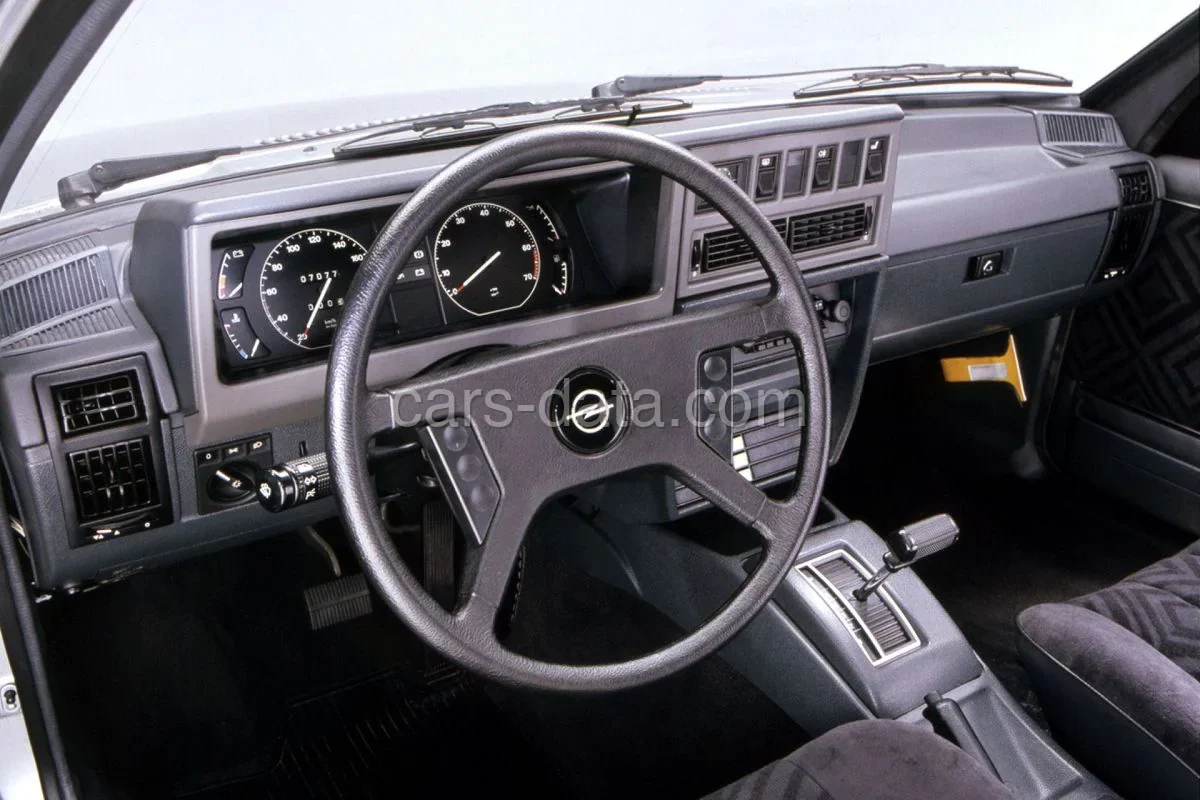
Opel Rekord Caravan 2.0 E at a glance
Performance
It accelerates from 0 to 100 km/h in 13 s and reaches a top speed of 181 km/h. Drive is routed to the rear-wheel-drive axle via a manual.
Efficiency & range
Fuel efficiency stands at 9.1 l/100 km combined.
Generation & history
This variant was introduced in 1982 as part of the Opel Rekord Caravan (1982-1984) generation, and sits alongside 12 other variants in this generation. It is both the most powerful and the quickest-accelerating variant of this generation.
Full specifications — including engine displacement, transmission type, dimensions, weight, and historical list price — are available on the specifications page.
Opel Rekord, in detail.
Browse by category.
What is the engine power of the Opel Rekord Caravan 2.0 E?
The Opel Rekord Caravan 2.0 E produces 110 hp (81 kW).
How fast does the Opel Rekord Caravan 2.0 E accelerate from 0 to 100 km/h?
The Opel Rekord Caravan 2.0 E accelerates from 0 to 100 km/h in 13.0 seconds.
What is the top speed of the Opel Rekord Caravan 2.0 E?
The top speed of the Opel Rekord Caravan 2.0 E is 181 km/h.
What is the fuel consumption of the Opel Rekord Caravan 2.0 E?
The Opel Rekord Caravan 2.0 E has a combined fuel consumption of 9.1 l/100 km.
What transmission does the Opel Rekord Caravan 2.0 E have?
The Opel Rekord Caravan 2.0 E is equipped with a Manual transmission.
Is the Opel Rekord Caravan 2.0 E front, rear, or all-wheel drive?
The Opel Rekord Caravan 2.0 E sends power through the RWD drivetrain.
What is the engine size of the Opel Rekord Caravan 2.0 E?
The Opel Rekord Caravan 2.0 E has a 1,979 cc engine with 4 cylinders.
What is the torque of the Opel Rekord Caravan 2.0 E?
The Opel Rekord Caravan 2.0 E produces 162 Nm of torque.
When was the Opel Rekord Caravan 2.0 E introduced?
The Opel Rekord Caravan 2.0 E was introduced in 1982.